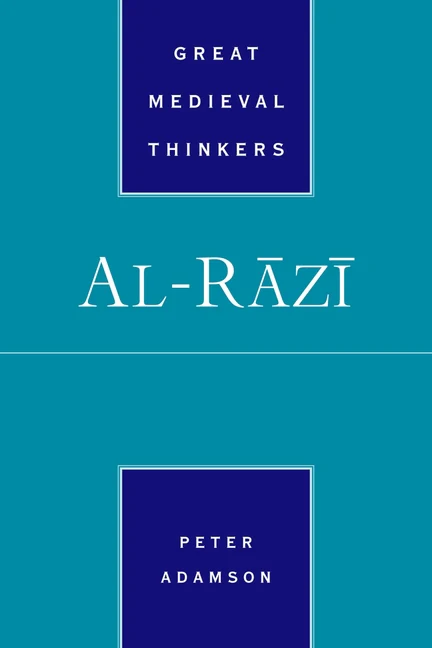
Al-Rāzī
This book introduces readers to Abu Bakr al-Razi (known in Latin as Rhazes), one of the most innovative and divisive figures of the early philosophical tradition in the Islamic world. Drawing on his extant works on ethics and a range of quotations and testimony from often hostile medieval
authors, Adamson reconstructs Razi's cosmological system, which posits four principles alongside God for the making of the universe: Soul, Matter, Time, and Place. Adamson argues that this system is fundamentally based on Plato, while it accepts Aristotle's physics as a relative or superficial
description of the universe. This notorious theory of the five eternals led to charges of heresy. But through an examination of his debates with contemporary Islamic theologians and representatives of Ismaili Shiism, Adamson shows that Razi's ideas about religion and prophecy may have been
distorted by intellectual opponents. Razi's scientific contributions are also considered in depth. One chapter is devoted to the philosophically rewarding aspects of Razi's extensive writings on medicine. His ideas about alchemy are also discussed along with his atomist account of matter. The final
chapter looks at Razi's views on ethics, and argues against a prominent interpretation of him as a hedonist inspired by Epicureanism. The book presupposes no prior knowledge of Razi or specialist knowledge of this period in the history of philosophy. It will be rewarding for anyone with an interest
in the reception of Greek philosophy, especially Plato, in the history of medicine, or of medieval philosophy more generally.
authors, Adamson reconstructs Razi's cosmological system, which posits four principles alongside God for the making of the universe: Soul, Matter, Time, and Place. Adamson argues that this system is fundamentally based on Plato, while it accepts Aristotle's physics as a relative or superficial
description of the universe. This notorious theory of the five eternals led to charges of heresy. But through an examination of his debates with contemporary Islamic theologians and representatives of Ismaili Shiism, Adamson shows that Razi's ideas about religion and prophecy may have been
distorted by intellectual opponents. Razi's scientific contributions are also considered in depth. One chapter is devoted to the philosophically rewarding aspects of Razi's extensive writings on medicine. His ideas about alchemy are also discussed along with his atomist account of matter. The final
chapter looks at Razi's views on ethics, and argues against a prominent interpretation of him as a hedonist inspired by Epicureanism. The book presupposes no prior knowledge of Razi or specialist knowledge of this period in the history of philosophy. It will be rewarding for anyone with an interest
in the reception of Greek philosophy, especially Plato, in the history of medicine, or of medieval philosophy more generally.
$22.68
Original: $64.79
-65%Al-Rāzī—
$64.79
$22.68Al-Rāzī
This book introduces readers to Abu Bakr al-Razi (known in Latin as Rhazes), one of the most innovative and divisive figures of the early philosophical tradition in the Islamic world. Drawing on his extant works on ethics and a range of quotations and testimony from often hostile medieval
authors, Adamson reconstructs Razi's cosmological system, which posits four principles alongside God for the making of the universe: Soul, Matter, Time, and Place. Adamson argues that this system is fundamentally based on Plato, while it accepts Aristotle's physics as a relative or superficial
description of the universe. This notorious theory of the five eternals led to charges of heresy. But through an examination of his debates with contemporary Islamic theologians and representatives of Ismaili Shiism, Adamson shows that Razi's ideas about religion and prophecy may have been
distorted by intellectual opponents. Razi's scientific contributions are also considered in depth. One chapter is devoted to the philosophically rewarding aspects of Razi's extensive writings on medicine. His ideas about alchemy are also discussed along with his atomist account of matter. The final
chapter looks at Razi's views on ethics, and argues against a prominent interpretation of him as a hedonist inspired by Epicureanism. The book presupposes no prior knowledge of Razi or specialist knowledge of this period in the history of philosophy. It will be rewarding for anyone with an interest
in the reception of Greek philosophy, especially Plato, in the history of medicine, or of medieval philosophy more generally.
authors, Adamson reconstructs Razi's cosmological system, which posits four principles alongside God for the making of the universe: Soul, Matter, Time, and Place. Adamson argues that this system is fundamentally based on Plato, while it accepts Aristotle's physics as a relative or superficial
description of the universe. This notorious theory of the five eternals led to charges of heresy. But through an examination of his debates with contemporary Islamic theologians and representatives of Ismaili Shiism, Adamson shows that Razi's ideas about religion and prophecy may have been
distorted by intellectual opponents. Razi's scientific contributions are also considered in depth. One chapter is devoted to the philosophically rewarding aspects of Razi's extensive writings on medicine. His ideas about alchemy are also discussed along with his atomist account of matter. The final
chapter looks at Razi's views on ethics, and argues against a prominent interpretation of him as a hedonist inspired by Epicureanism. The book presupposes no prior knowledge of Razi or specialist knowledge of this period in the history of philosophy. It will be rewarding for anyone with an interest
in the reception of Greek philosophy, especially Plato, in the history of medicine, or of medieval philosophy more generally.
Product Information
Product Information
Shipping & Returns
Shipping & Returns
Description
This book introduces readers to Abu Bakr al-Razi (known in Latin as Rhazes), one of the most innovative and divisive figures of the early philosophical tradition in the Islamic world. Drawing on his extant works on ethics and a range of quotations and testimony from often hostile medieval
authors, Adamson reconstructs Razi's cosmological system, which posits four principles alongside God for the making of the universe: Soul, Matter, Time, and Place. Adamson argues that this system is fundamentally based on Plato, while it accepts Aristotle's physics as a relative or superficial
description of the universe. This notorious theory of the five eternals led to charges of heresy. But through an examination of his debates with contemporary Islamic theologians and representatives of Ismaili Shiism, Adamson shows that Razi's ideas about religion and prophecy may have been
distorted by intellectual opponents. Razi's scientific contributions are also considered in depth. One chapter is devoted to the philosophically rewarding aspects of Razi's extensive writings on medicine. His ideas about alchemy are also discussed along with his atomist account of matter. The final
chapter looks at Razi's views on ethics, and argues against a prominent interpretation of him as a hedonist inspired by Epicureanism. The book presupposes no prior knowledge of Razi or specialist knowledge of this period in the history of philosophy. It will be rewarding for anyone with an interest
in the reception of Greek philosophy, especially Plato, in the history of medicine, or of medieval philosophy more generally.
authors, Adamson reconstructs Razi's cosmological system, which posits four principles alongside God for the making of the universe: Soul, Matter, Time, and Place. Adamson argues that this system is fundamentally based on Plato, while it accepts Aristotle's physics as a relative or superficial
description of the universe. This notorious theory of the five eternals led to charges of heresy. But through an examination of his debates with contemporary Islamic theologians and representatives of Ismaili Shiism, Adamson shows that Razi's ideas about religion and prophecy may have been
distorted by intellectual opponents. Razi's scientific contributions are also considered in depth. One chapter is devoted to the philosophically rewarding aspects of Razi's extensive writings on medicine. His ideas about alchemy are also discussed along with his atomist account of matter. The final
chapter looks at Razi's views on ethics, and argues against a prominent interpretation of him as a hedonist inspired by Epicureanism. The book presupposes no prior knowledge of Razi or specialist knowledge of this period in the history of philosophy. It will be rewarding for anyone with an interest
in the reception of Greek philosophy, especially Plato, in the history of medicine, or of medieval philosophy more generally.