Dalail al Khayrat
Dala’il al-Khayrat is unquestionably the most celebrated manual of Blessings on the Prophet (Allah bless him and give him peace) in history. It was composed by Sufi, wali, Muslim scholar of prophetic descent and by Marrakesh Muhammad ibn Sulayman al-Jazuli (d. 870/1465). Born and raised among the Gazulah Berbers of the Sus region of southern Morocco, he studied the Qur’an and traditional Islamic knowledge before traveling to Fez.
Dala'il al-Khayrat celebrity swept the Islamic World from North Africa to Indonesia. Scarcely a well-to-do home was without one, princes exchanged magnificently embellished copies of it, and commoners treasured it. Pilgrims wore it at their side on the way to
More Info --
The Story of Dala’il al-Khayrat by Sheikh Nuh Ha Mim Keller Dala’il al-Khayrat, the most celebrated manual of Blessings on the Prophet (Allah bless him and give him peace) in history, was composed by the Sufi, wali, Muslim scholar of prophetic descent, and
Amghar traced his spiritual lineage through only six masters to the great founder of their order Abul Hasan al-Shadhili and thence back to the Prophet (Allah bless him and give him peace). After initiating Jazuli into the way, he placed him in a
Imam Ahmad al-Sawi relates that
His spiritual path drew thousands of disciples who, aided by the popularity of his manual of Blessings on the Prophet (Allah bless him and give him peace), had a tremendous effect on Moroccan society. He taught followers the Blessings upon the Prophet (Allah bless him and give him peace), extinction of self in the love of Allah and His messenger, visiting the
Its celebrity swept the Islamic World from North Africa to Indonesia. Scarcely a well-to-do home was without one, princes exchanged magnificently embellished copies of it, commoners treasured it. Pilgrims wore it at their side on the way to
In the post-caliphal period of the present day, Imam Jazuli’s masterpiece has been eclipsed by the
Sheikh Nuh Keller
A New Dala’il al-Khayrat by Sheikh Nuh Ha Mim Keller It was our hope that Allah might turn this tide by helping us bring forth a new edition of Jazuli’s famous manual that would be more beautiful, accurate, and easy for Muslims to use than any previous printing.
The Text We began in June 2003 with a survey of ninety-five manuscripts of the Dala’il from several countries. Their minor textual variants led us back to the work’s excellent and detailed commentary Matali‘ al-
By careful comparison of manuscripts and commentaries, we corrected the traditional chapter headings and subtitles, dividing the work into the customary daily portions of halves, thirds, quarters, and eighths or
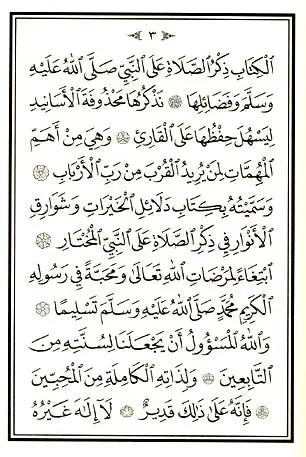
The Calligraphy We searched in Syria, Jordan, Iraq, Turkey, Saudi Arabia, and Morocco for a calligrapher whose Arabic script could best reflect the beauty, light, and
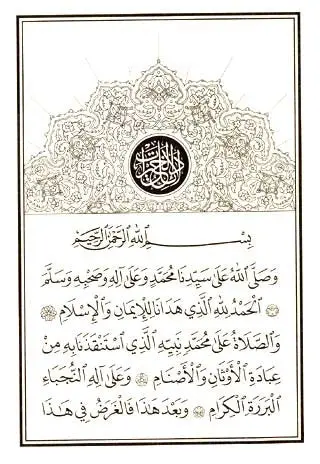
The Illumination We contacted the Turkish artist Necati Sancaktutan to draw the ornaments used for the pauses in the text, and then an Iraqi team of two brothers, Muthanna and Muhammad al-‘Ubaydi, to produce the illumination for the sections, beginnings, and end. They came to Jordan twice, on their first visit providing samples and discussing color and style, and on their second bringing their tools, colors, and gold for the main work, which they completed in approximately fifty days.
Their work was
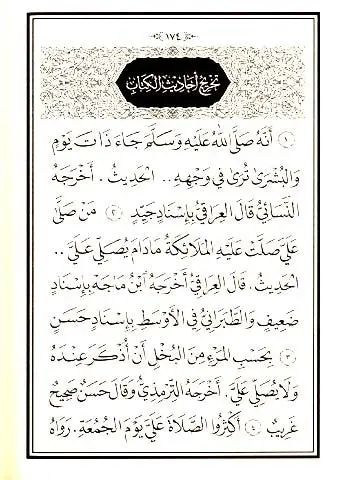
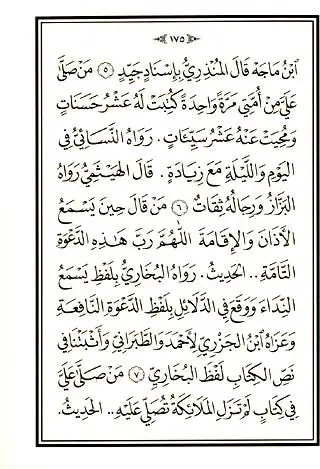
The Hadiths We wanted to clarify to readers the hadiths in a prefatory chapter to the main work that
The Ijaza For the
The Design The book’s size, page layout, frames, gold, and colors were designed to match
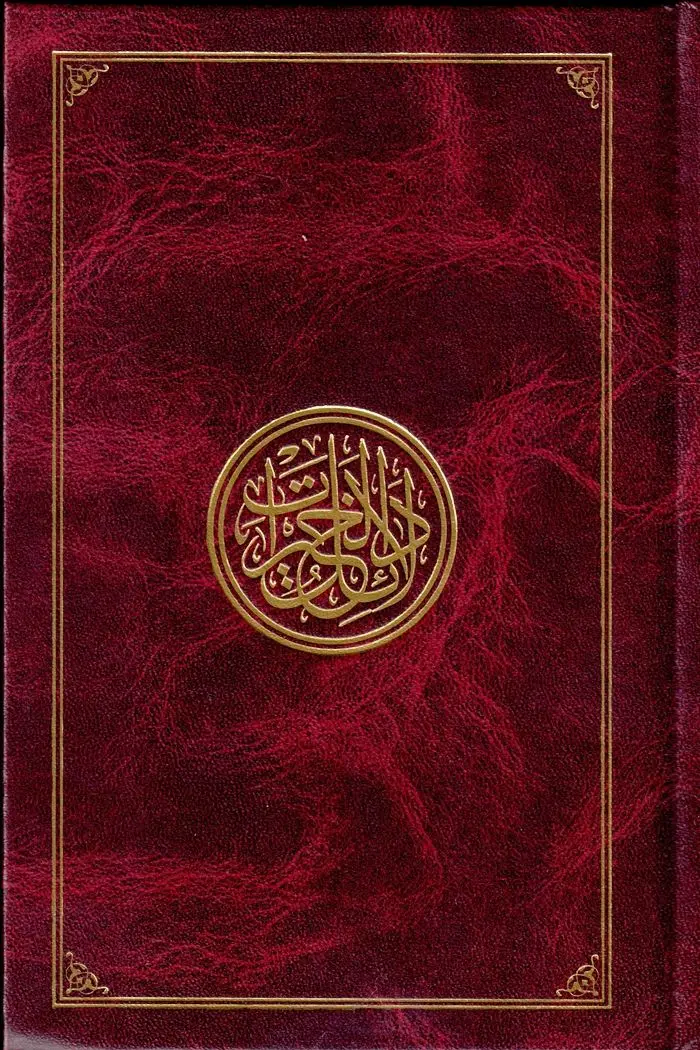
Finally, we commissioned the Iraqi calligrapher ‘Abbas al-Baghdadi to produce the circular medallion of the book’s name that graces the cover and the first page of the work.
The Printing After many steps to prepare the materials, we printed the work at National Press in Jordan. They were recommended by their proven excellence in color work in previous art calendars and other projects, and by being able to produce a sufficiently opulent imitation of the gold used in the original ornamentation. Our typesetter and computer graphics artist Sohail Nakhooda assured us that he could get the best cooperation out of the staff there in the final steps of combining the many electronic elements of each page.
We bound a few hundred copies in Jordan, but then met with Fu’ad al-Ba‘ayno in Beirut, the largest bookbinder in the Middle East, to see his samples and agree upon the materials to be used for both the rest of the
Sheikh Nuh Keller
More Images
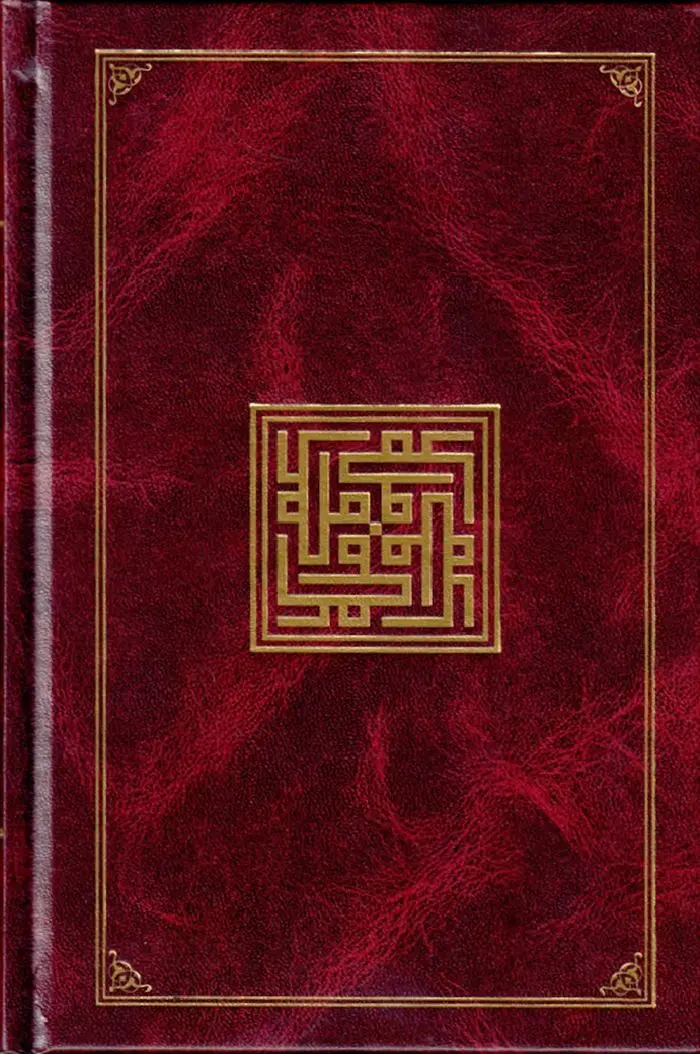
Dalail al Khayrat
Dala’il al-Khayrat is unquestionably the most celebrated manual of Blessings on the Prophet (Allah bless him and give him peace) in history. It was composed by Sufi, wali, Muslim scholar of prophetic descent and by Marrakesh Muhammad ibn Sulayman al-Jazuli (d. 870/1465). Born and raised among the Gazulah Berbers of the Sus region of southern Morocco, he studied the Qur’an and traditional Islamic knowledge before traveling to Fez.
Dala'il al-Khayrat celebrity swept the Islamic World from North Africa to Indonesia. Scarcely a well-to-do home was without one, princes exchanged magnificently embellished copies of it, and commoners treasured it. Pilgrims wore it at their side on the way to
More Info --
The Story of Dala’il al-Khayrat by Sheikh Nuh Ha Mim Keller Dala’il al-Khayrat, the most celebrated manual of Blessings on the Prophet (Allah bless him and give him peace) in history, was composed by the Sufi, wali, Muslim scholar of prophetic descent, and
Amghar traced his spiritual lineage through only six masters to the great founder of their order Abul Hasan al-Shadhili and thence back to the Prophet (Allah bless him and give him peace). After initiating Jazuli into the way, he placed him in a
Imam Ahmad al-Sawi relates that
His spiritual path drew thousands of disciples who, aided by the popularity of his manual of Blessings on the Prophet (Allah bless him and give him peace), had a tremendous effect on Moroccan society. He taught followers the Blessings upon the Prophet (Allah bless him and give him peace), extinction of self in the love of Allah and His messenger, visiting the
Its celebrity swept the Islamic World from North Africa to Indonesia. Scarcely a well-to-do home was without one, princes exchanged magnificently embellished copies of it, commoners treasured it. Pilgrims wore it at their side on the way to
In the post-caliphal period of the present day, Imam Jazuli’s masterpiece has been eclipsed by the
Sheikh Nuh Keller
A New Dala’il al-Khayrat by Sheikh Nuh Ha Mim Keller It was our hope that Allah might turn this tide by helping us bring forth a new edition of Jazuli’s famous manual that would be more beautiful, accurate, and easy for Muslims to use than any previous printing.
The Text We began in June 2003 with a survey of ninety-five manuscripts of the Dala’il from several countries. Their minor textual variants led us back to the work’s excellent and detailed commentary Matali‘ al-
By careful comparison of manuscripts and commentaries, we corrected the traditional chapter headings and subtitles, dividing the work into the customary daily portions of halves, thirds, quarters, and eighths or
The Calligraphy We searched in Syria, Jordan, Iraq, Turkey, Saudi Arabia, and Morocco for a calligrapher whose Arabic script could best reflect the beauty, light, and
The Illumination We contacted the Turkish artist Necati Sancaktutan to draw the ornaments used for the pauses in the text, and then an Iraqi team of two brothers, Muthanna and Muhammad al-‘Ubaydi, to produce the illumination for the sections, beginnings, and end. They came to Jordan twice, on their first visit providing samples and discussing color and style, and on their second bringing their tools, colors, and gold for the main work, which they completed in approximately fifty days.
Their work was
The Hadiths We wanted to clarify to readers the hadiths in a prefatory chapter to the main work that
The Ijaza For the
The Design The book’s size, page layout, frames, gold, and colors were designed to match
Finally, we commissioned the Iraqi calligrapher ‘Abbas al-Baghdadi to produce the circular medallion of the book’s name that graces the cover and the first page of the work.
The Printing After many steps to prepare the materials, we printed the work at National Press in Jordan. They were recommended by their proven excellence in color work in previous art calendars and other projects, and by being able to produce a sufficiently opulent imitation of the gold used in the original ornamentation. Our typesetter and computer graphics artist Sohail Nakhooda assured us that he could get the best cooperation out of the staff there in the final steps of combining the many electronic elements of each page.
We bound a few hundred copies in Jordan, but then met with Fu’ad al-Ba‘ayno in Beirut, the largest bookbinder in the Middle East, to see his samples and agree upon the materials to be used for both the rest of the
Sheikh Nuh Keller
Product Information
Product Information
Shipping & Returns
Shipping & Returns
Description
Dala’il al-Khayrat is unquestionably the most celebrated manual of Blessings on the Prophet (Allah bless him and give him peace) in history. It was composed by Sufi, wali, Muslim scholar of prophetic descent and by Marrakesh Muhammad ibn Sulayman al-Jazuli (d. 870/1465). Born and raised among the Gazulah Berbers of the Sus region of southern Morocco, he studied the Qur’an and traditional Islamic knowledge before traveling to Fez.
Dala'il al-Khayrat celebrity swept the Islamic World from North Africa to Indonesia. Scarcely a well-to-do home was without one, princes exchanged magnificently embellished copies of it, and commoners treasured it. Pilgrims wore it at their side on the way to
More Info --
The Story of Dala’il al-Khayrat by Sheikh Nuh Ha Mim Keller Dala’il al-Khayrat, the most celebrated manual of Blessings on the Prophet (Allah bless him and give him peace) in history, was composed by the Sufi, wali, Muslim scholar of prophetic descent, and
Amghar traced his spiritual lineage through only six masters to the great founder of their order Abul Hasan al-Shadhili and thence back to the Prophet (Allah bless him and give him peace). After initiating Jazuli into the way, he placed him in a
Imam Ahmad al-Sawi relates that
His spiritual path drew thousands of disciples who, aided by the popularity of his manual of Blessings on the Prophet (Allah bless him and give him peace), had a tremendous effect on Moroccan society. He taught followers the Blessings upon the Prophet (Allah bless him and give him peace), extinction of self in the love of Allah and His messenger, visiting the
Its celebrity swept the Islamic World from North Africa to Indonesia. Scarcely a well-to-do home was without one, princes exchanged magnificently embellished copies of it, commoners treasured it. Pilgrims wore it at their side on the way to
In the post-caliphal period of the present day, Imam Jazuli’s masterpiece has been eclipsed by the
Sheikh Nuh Keller
A New Dala’il al-Khayrat by Sheikh Nuh Ha Mim Keller It was our hope that Allah might turn this tide by helping us bring forth a new edition of Jazuli’s famous manual that would be more beautiful, accurate, and easy for Muslims to use than any previous printing.
The Text We began in June 2003 with a survey of ninety-five manuscripts of the Dala’il from several countries. Their minor textual variants led us back to the work’s excellent and detailed commentary Matali‘ al-
By careful comparison of manuscripts and commentaries, we corrected the traditional chapter headings and subtitles, dividing the work into the customary daily portions of halves, thirds, quarters, and eighths or
The Calligraphy We searched in Syria, Jordan, Iraq, Turkey, Saudi Arabia, and Morocco for a calligrapher whose Arabic script could best reflect the beauty, light, and
The Illumination We contacted the Turkish artist Necati Sancaktutan to draw the ornaments used for the pauses in the text, and then an Iraqi team of two brothers, Muthanna and Muhammad al-‘Ubaydi, to produce the illumination for the sections, beginnings, and end. They came to Jordan twice, on their first visit providing samples and discussing color and style, and on their second bringing their tools, colors, and gold for the main work, which they completed in approximately fifty days.
Their work was
The Hadiths We wanted to clarify to readers the hadiths in a prefatory chapter to the main work that
The Ijaza For the
The Design The book’s size, page layout, frames, gold, and colors were designed to match
Finally, we commissioned the Iraqi calligrapher ‘Abbas al-Baghdadi to produce the circular medallion of the book’s name that graces the cover and the first page of the work.
The Printing After many steps to prepare the materials, we printed the work at National Press in Jordan. They were recommended by their proven excellence in color work in previous art calendars and other projects, and by being able to produce a sufficiently opulent imitation of the gold used in the original ornamentation. Our typesetter and computer graphics artist Sohail Nakhooda assured us that he could get the best cooperation out of the staff there in the final steps of combining the many electronic elements of each page.
We bound a few hundred copies in Jordan, but then met with Fu’ad al-Ba‘ayno in Beirut, the largest bookbinder in the Middle East, to see his samples and agree upon the materials to be used for both the rest of the
Sheikh Nuh Keller