The Karahisari Imperial Quran — Full-Scale Museum Facsimile
From Private Collection ·

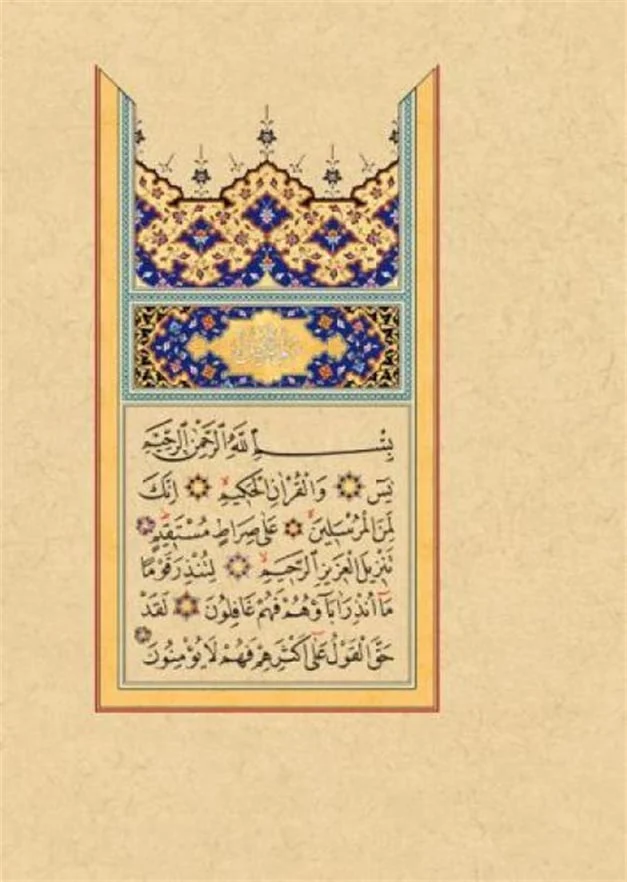
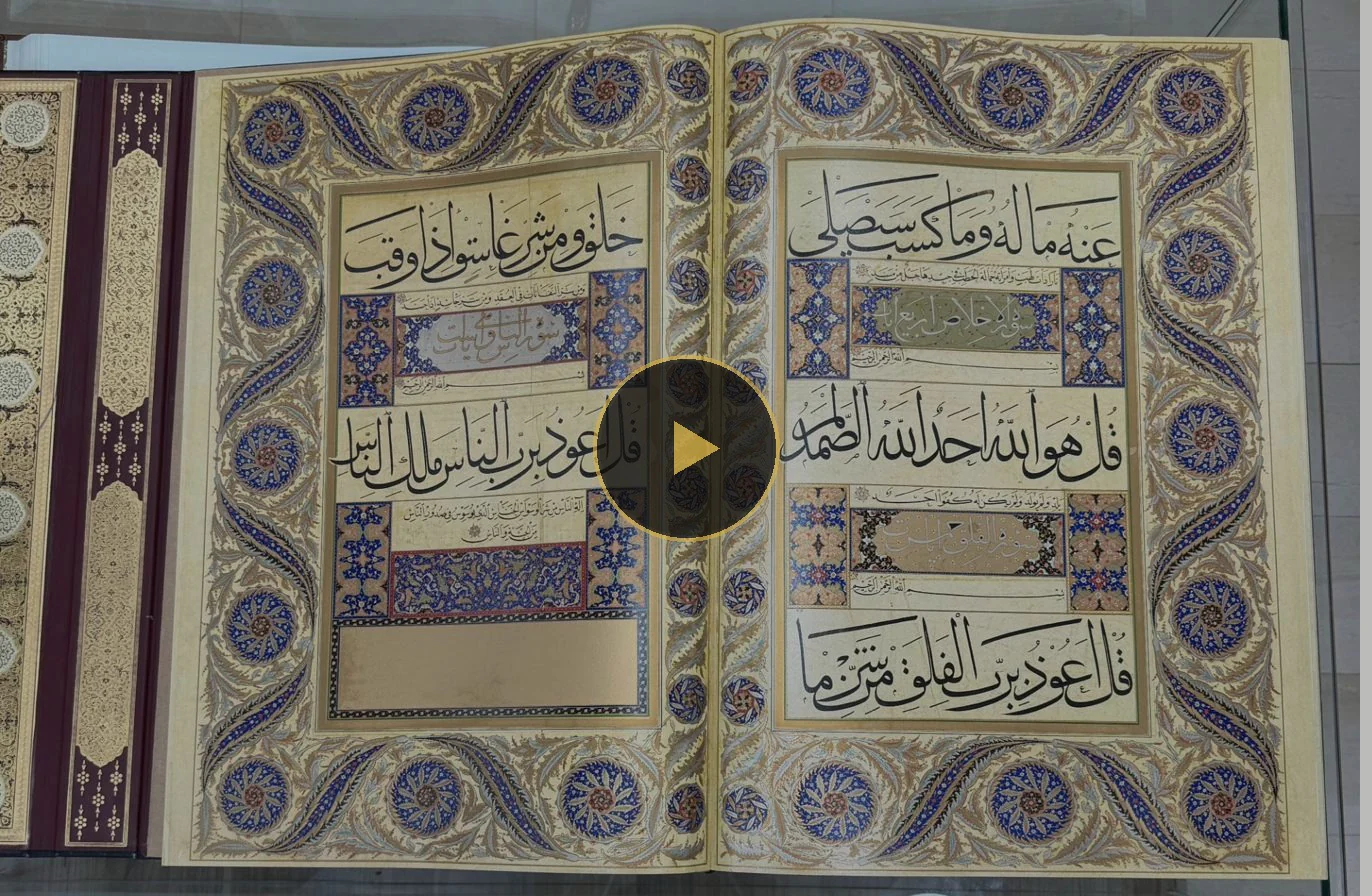
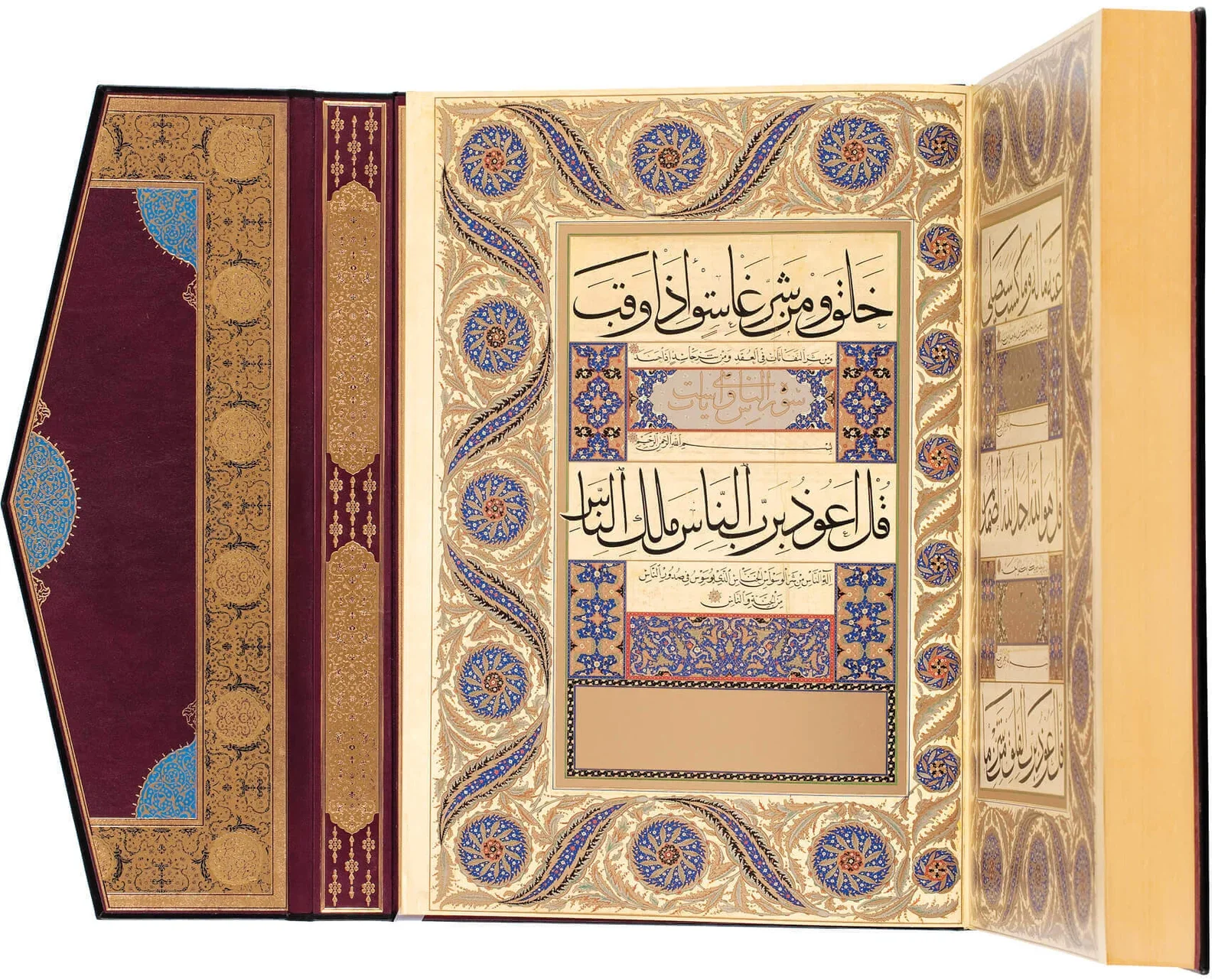
The final illuminated pages — Surat al-Falaq and Surat an-Nas with ornate saz-style border medallions
Among the manuscripts preserved within Topkapi Palace, there is one that occupies a position unlike any other. It was commissioned by Sultan Suleyman the Magnificent, begun around 1545 by the calligrapher his contemporaries called Şemsü'l-Hat — the Sun of Calligraphy — and placed, upon its completion, in the same chamber as the Prophet Muhammad's own mantle.
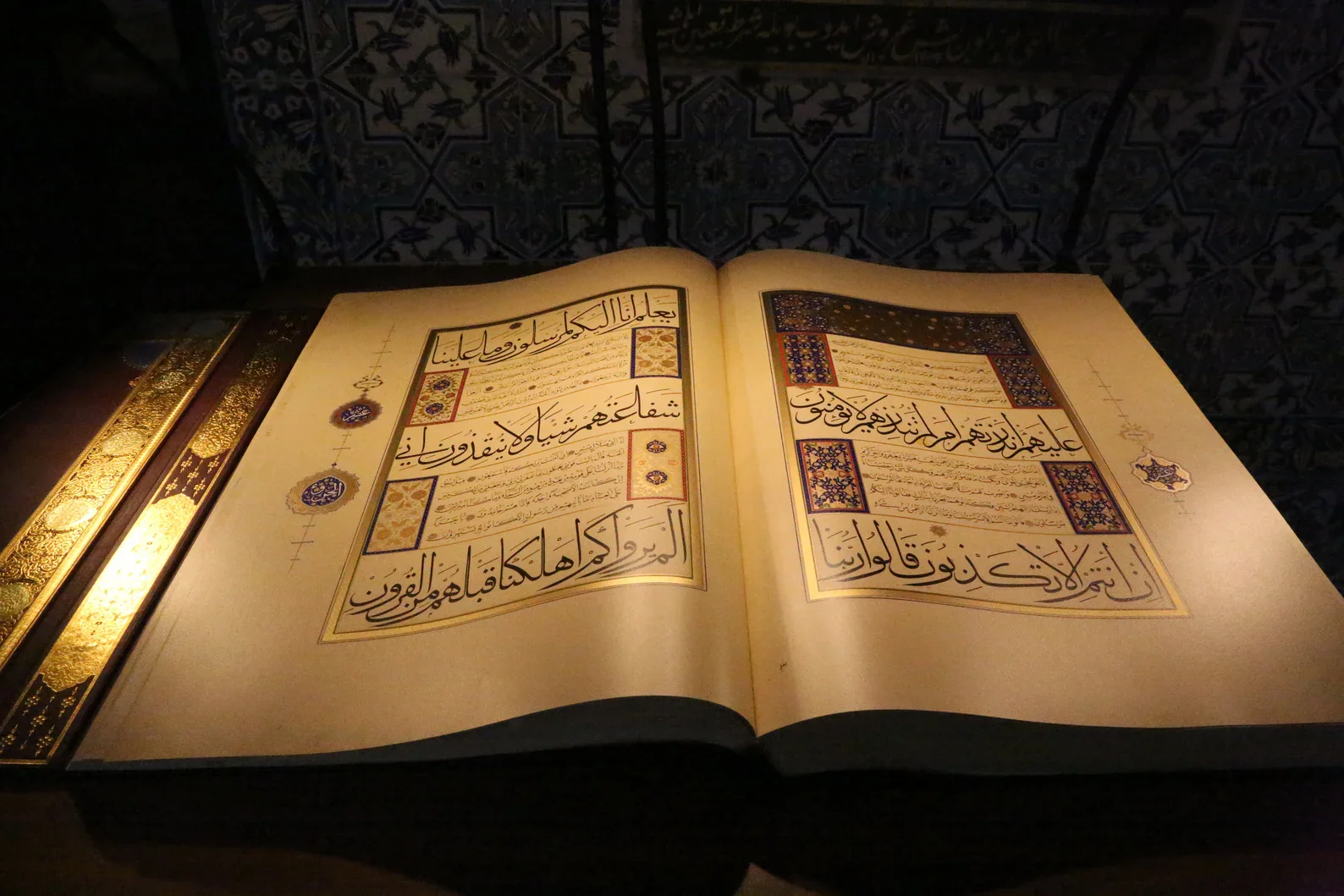
Measuring 70 × 45 cm across 300 folios written in five distinct scripts — muhaqqaq, rayhani, thuluth, naskh, and tawqi — it is the largest Quran ever produced in the Ottoman world. Its creation spanned forty years and three sultanates, begun by Ahmed Karahisari and completed by his adopted son Hasan Çelebi, with illumination by the finest artists of the imperial nakkaşhane.
It remained in the Hırka-i Saadet — the Chamber of the Sacred Relics — for over four centuries, where 28 hafizes have maintained uninterrupted Quran recitation in rotating shifts for more than 500 years. In 2015, a full-scale facsimile was produced for the first time. This is now available exclusively through MeccaBooks.

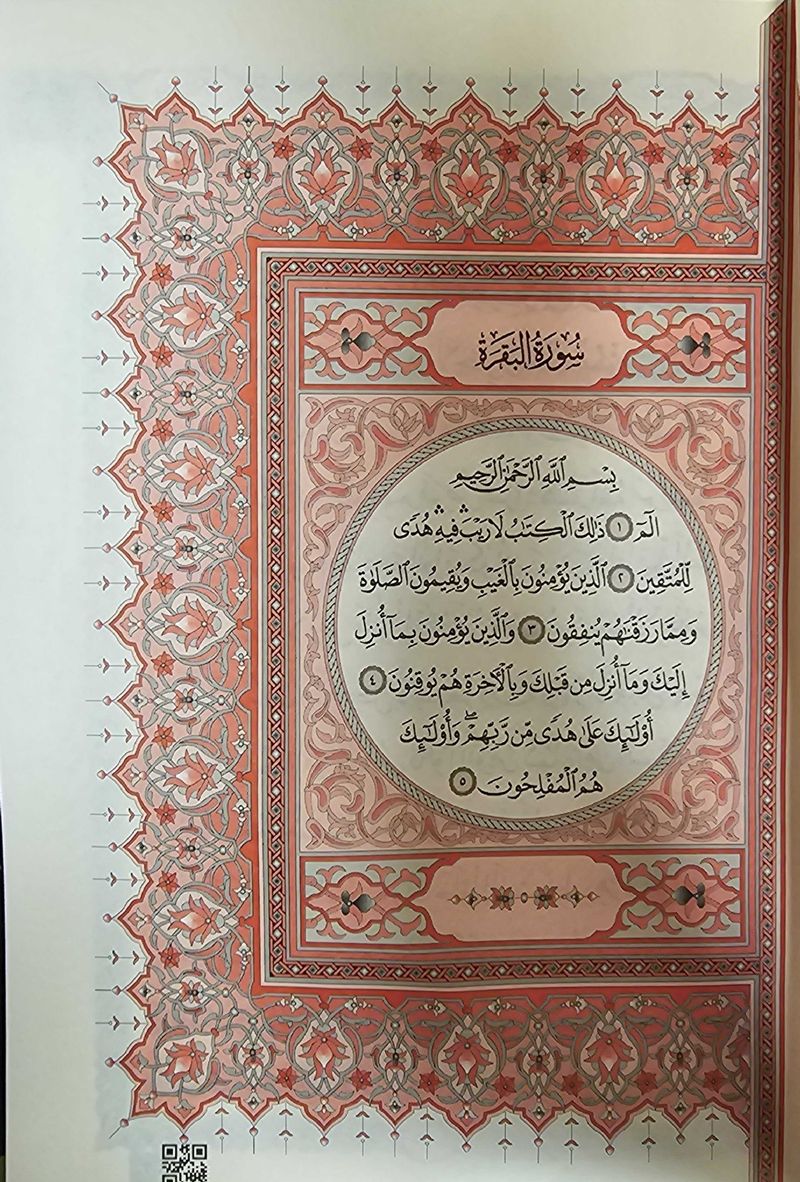
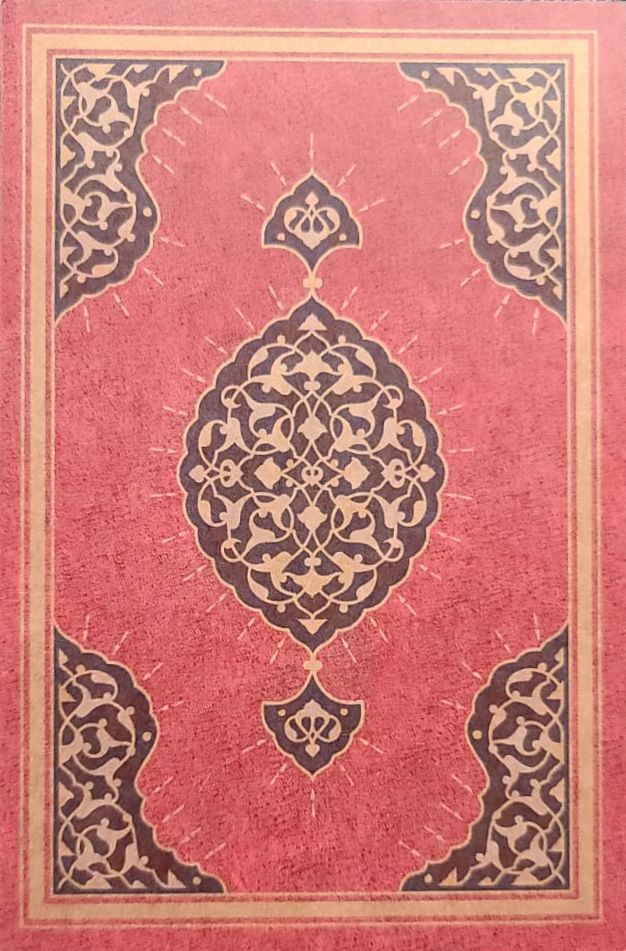
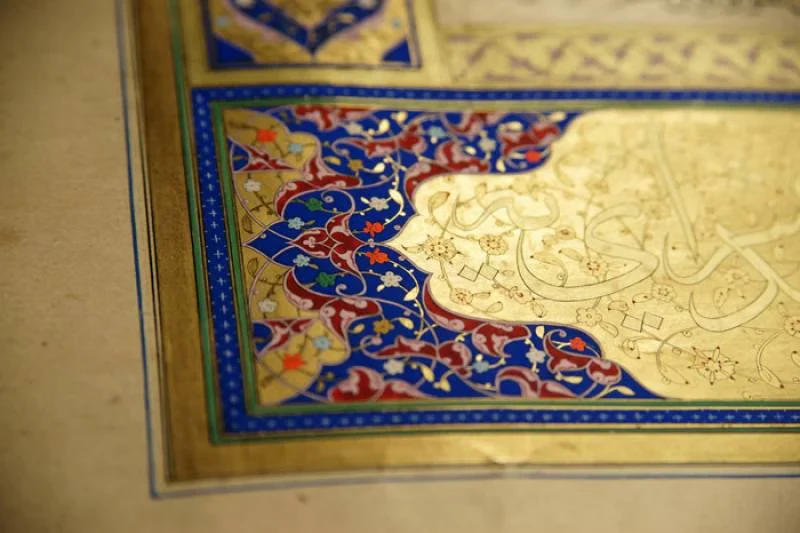
Detail: Tezhip illumination in gold leaf, lapis lazuli, and crimson — the apex of Ottoman palace gilding art
The Calligrapher
Ahmed Şemseddin Karahisari (c. 1468–1556) is recognised alongside Shaykh Hamdullah and Hâfız Osman as one of the three supreme masters of Ottoman calligraphy. While Hamdullah created the distinctly Ottoman national style, Karahisari pursued a different path — reviving and refining the classical Abbasid tradition of Yaqut al-Musta'simi, the last great calligrapher of the Baghdad court.
His contemporaries honoured him with the title Yâkut-i Rûm — the Yaqut of Anatolia — and Şemsü'l-Hat, the Sun of Calligraphy. The Metropolitan Museum of Art identifies him among the most renowned artists of Suleyman's Golden Age, alongside the painter Kara Memi and architect Sinan.
Beyond calligraphy, Karahisari was a sheikh of the Khalwati Sufi Order. Sources describe him as a man of simple habits, modest living, love of the poor, and skill in poetry in Arabic, Turkish, and Persian. He died in 1556 with this manuscript unfinished — its colophon left blank — and the remaining folios were completed by his adopted son Hasan Çelebi, whom architect Mimar Sinan reportedly called "the Mecca of calligraphers."

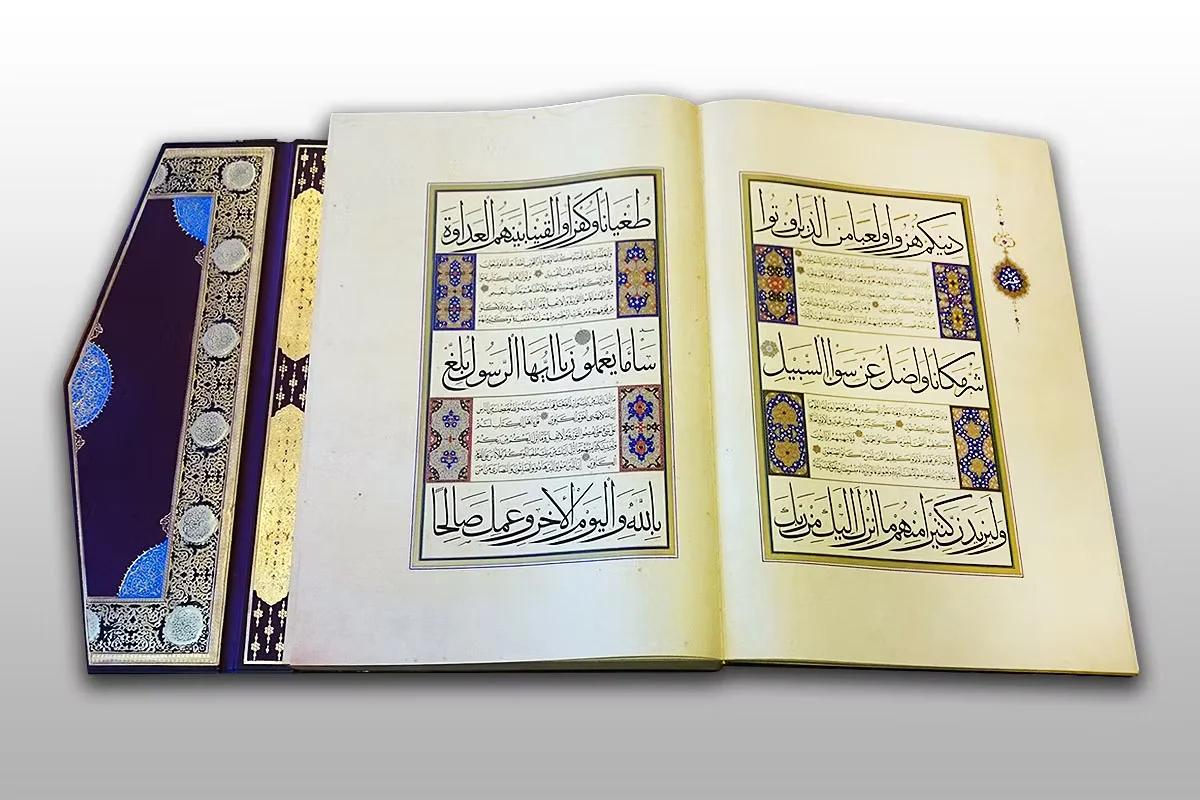
Interior spread — five calligraphic scripts in hierarchical arrangement, every page illuminated
The Illumination
The illumination represents the apex of Ottoman tezhip. Every page was meticulously gilded in a palette dominated by gold and lapis lazuli, executed within the nakkaşhane — the imperial design workshop within Topkapi Palace. The manuscript bears the strong influence of Karamemi's style, with semi-naturalistic floral elements in the double tahrir technique alongside classical rumî and hatayî motifs.
Illuminated elements include zahriye (decorative facing pages), serlevha (the most lavishly decorated opening pages), surah-beginning panels, marginal güller, koltuk side panels, and durak verse markers — incorporating the richest examples of Ottoman palace gilding art. The manuscript was featured in the 2016 Smithsonian exhibition The Art of the Qur'an: Treasures from the Museum of Turkish and Islamic Arts and most recently in the Mushafs of the Sultans exhibition at Istanbul's Rami Library.
"The single most important Ottoman Quran, housed in the most sacred room of the most important Ottoman palace, written by the calligrapher his contemporaries called the Sun."
Topkapi Palace Museum Library · Hırka-i Saadet No. 5
Watch the Manuscript
A closer look at the calligraphy, illumination, and presentation of the facsimile edition
Edition Particulars
Foundation for Classical Turkish Arts, Istanbul
Actual manuscript scale
Prof. Muhittin Serin · Trilingual (EN / AR / TR)
Hırka-i Saadet, No. 5
Not available elsewhere

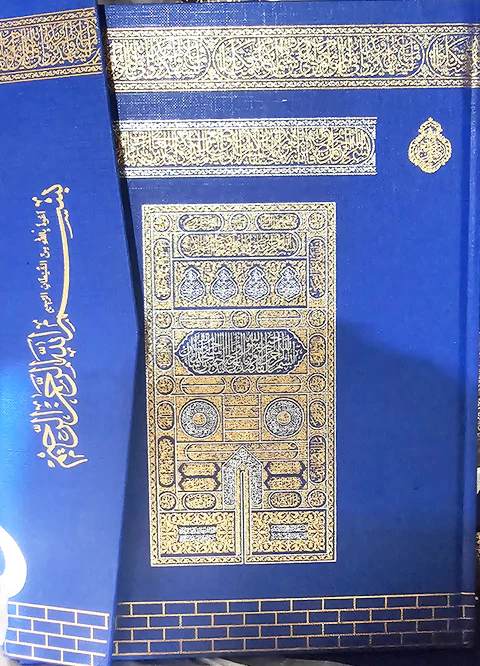
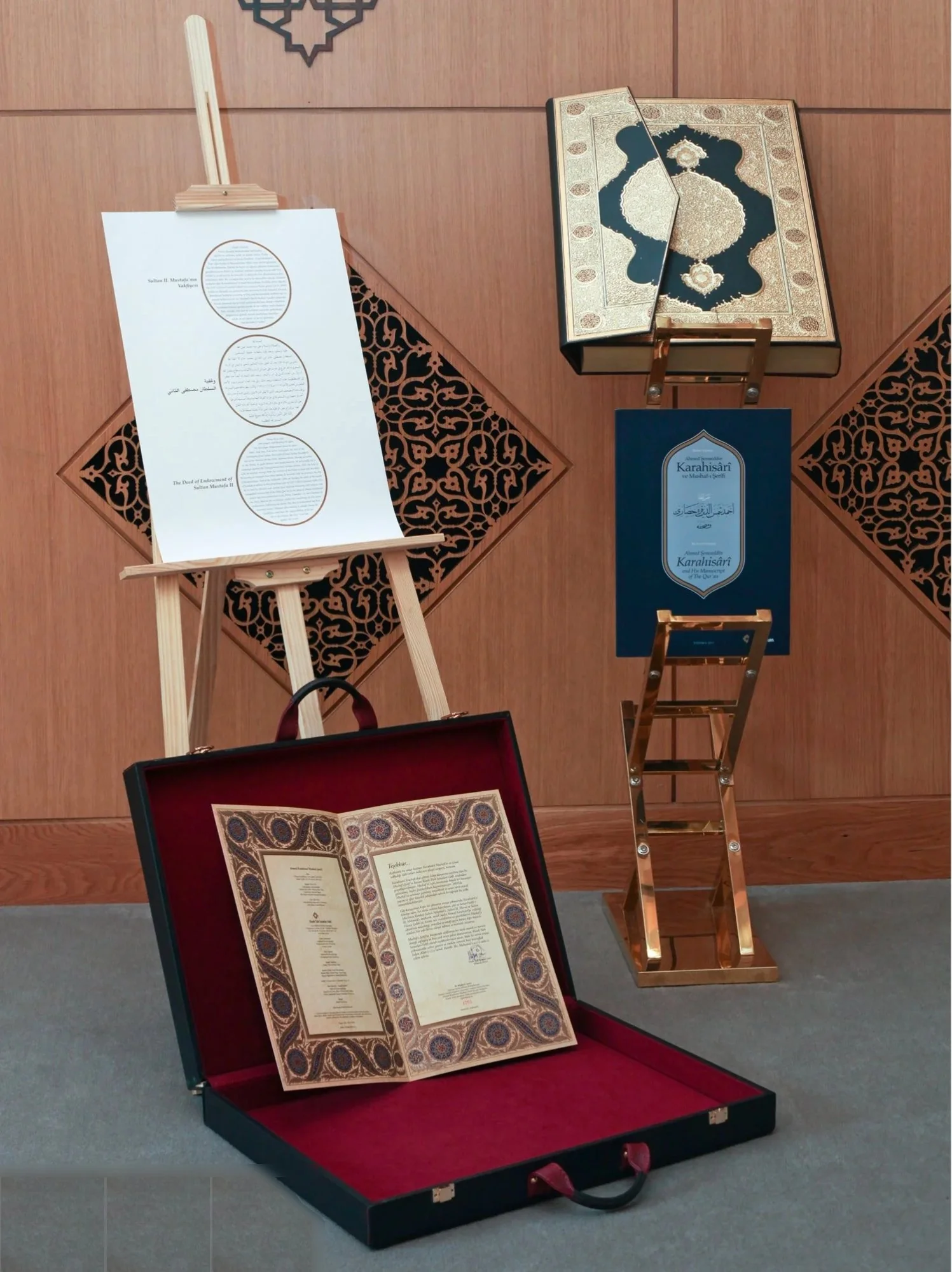
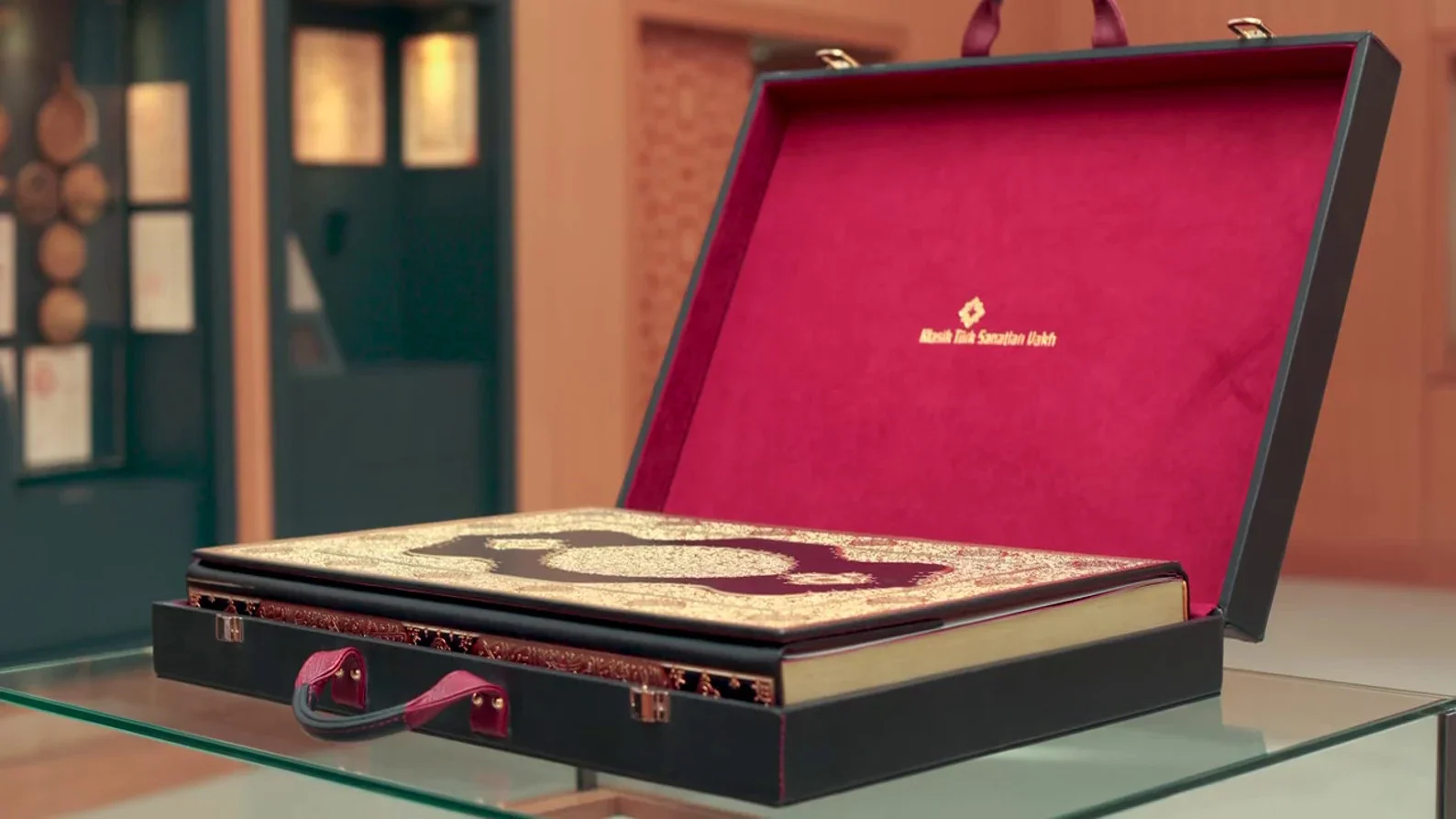
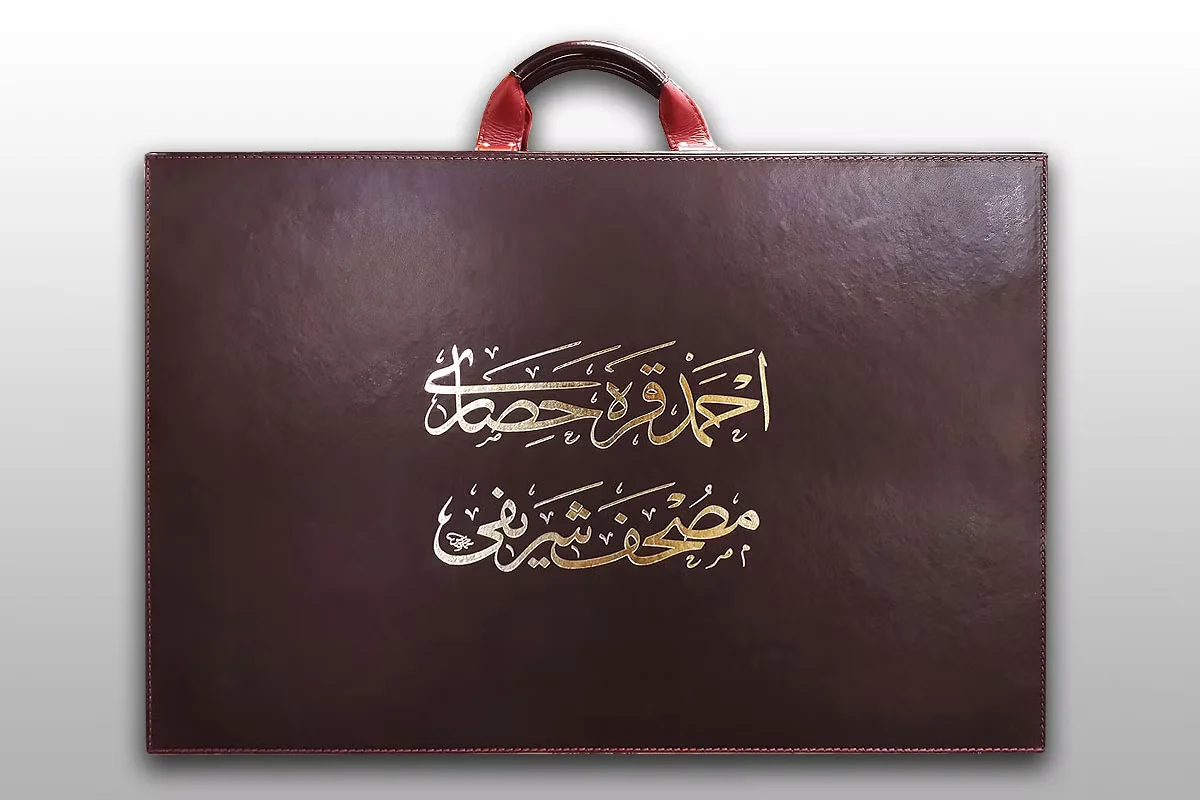
Gilt-embossed leather binding with fitted velvet-lined leather wrapped wooden carrying case with handles

The complete offering: facsimile Quran, scholarly companion volume, and presentation case
Shipping & Handling
Fully insured shipping. Dispatched within one business day. Signature required upon delivery.
Acquisition
This copy was acquired from a private collection and is not currently available through any other channel. Enquiries are welcomed from collectors and institutions.
Or request a private consultation
More Images
The Karahisari Imperial Quran — Full-Scale Museum Facsimile
From Private Collection ·
The final illuminated pages — Surat al-Falaq and Surat an-Nas with ornate saz-style border medallions
Among the manuscripts preserved within Topkapi Palace, there is one that occupies a position unlike any other. It was commissioned by Sultan Suleyman the Magnificent, begun around 1545 by the calligrapher his contemporaries called Şemsü'l-Hat — the Sun of Calligraphy — and placed, upon its completion, in the same chamber as the Prophet Muhammad's own mantle.
Measuring 70 × 45 cm across 300 folios written in five distinct scripts — muhaqqaq, rayhani, thuluth, naskh, and tawqi — it is the largest Quran ever produced in the Ottoman world. Its creation spanned forty years and three sultanates, begun by Ahmed Karahisari and completed by his adopted son Hasan Çelebi, with illumination by the finest artists of the imperial nakkaşhane.
It remained in the Hırka-i Saadet — the Chamber of the Sacred Relics — for over four centuries, where 28 hafizes have maintained uninterrupted Quran recitation in rotating shifts for more than 500 years. In 2015, a full-scale facsimile was produced for the first time. This is now available exclusively through MeccaBooks.
Detail: Tezhip illumination in gold leaf, lapis lazuli, and crimson — the apex of Ottoman palace gilding art
The Calligrapher
Ahmed Şemseddin Karahisari (c. 1468–1556) is recognised alongside Shaykh Hamdullah and Hâfız Osman as one of the three supreme masters of Ottoman calligraphy. While Hamdullah created the distinctly Ottoman national style, Karahisari pursued a different path — reviving and refining the classical Abbasid tradition of Yaqut al-Musta'simi, the last great calligrapher of the Baghdad court.
His contemporaries honoured him with the title Yâkut-i Rûm — the Yaqut of Anatolia — and Şemsü'l-Hat, the Sun of Calligraphy. The Metropolitan Museum of Art identifies him among the most renowned artists of Suleyman's Golden Age, alongside the painter Kara Memi and architect Sinan.
Beyond calligraphy, Karahisari was a sheikh of the Khalwati Sufi Order. Sources describe him as a man of simple habits, modest living, love of the poor, and skill in poetry in Arabic, Turkish, and Persian. He died in 1556 with this manuscript unfinished — its colophon left blank — and the remaining folios were completed by his adopted son Hasan Çelebi, whom architect Mimar Sinan reportedly called "the Mecca of calligraphers."
Interior spread — five calligraphic scripts in hierarchical arrangement, every page illuminated
The Illumination
The illumination represents the apex of Ottoman tezhip. Every page was meticulously gilded in a palette dominated by gold and lapis lazuli, executed within the nakkaşhane — the imperial design workshop within Topkapi Palace. The manuscript bears the strong influence of Karamemi's style, with semi-naturalistic floral elements in the double tahrir technique alongside classical rumî and hatayî motifs.
Illuminated elements include zahriye (decorative facing pages), serlevha (the most lavishly decorated opening pages), surah-beginning panels, marginal güller, koltuk side panels, and durak verse markers — incorporating the richest examples of Ottoman palace gilding art. The manuscript was featured in the 2016 Smithsonian exhibition The Art of the Qur'an: Treasures from the Museum of Turkish and Islamic Arts and most recently in the Mushafs of the Sultans exhibition at Istanbul's Rami Library.
"The single most important Ottoman Quran, housed in the most sacred room of the most important Ottoman palace, written by the calligrapher his contemporaries called the Sun."
Topkapi Palace Museum Library · Hırka-i Saadet No. 5
Watch the Manuscript
A closer look at the calligraphy, illumination, and presentation of the facsimile edition
Edition Particulars
Foundation for Classical Turkish Arts, Istanbul
Actual manuscript scale
Prof. Muhittin Serin · Trilingual (EN / AR / TR)
Hırka-i Saadet, No. 5
Not available elsewhere
Gilt-embossed leather binding with fitted velvet-lined leather wrapped wooden carrying case with handles
The complete offering: facsimile Quran, scholarly companion volume, and presentation case
Shipping & Handling
Fully insured shipping. Dispatched within one business day. Signature required upon delivery.
Acquisition
This copy was acquired from a private collection and is not currently available through any other channel. Enquiries are welcomed from collectors and institutions.
Or request a private consultation
Product Information
Product Information
Shipping & Returns
Shipping & Returns
Description
From Private Collection ·
The final illuminated pages — Surat al-Falaq and Surat an-Nas with ornate saz-style border medallions
Among the manuscripts preserved within Topkapi Palace, there is one that occupies a position unlike any other. It was commissioned by Sultan Suleyman the Magnificent, begun around 1545 by the calligrapher his contemporaries called Şemsü'l-Hat — the Sun of Calligraphy — and placed, upon its completion, in the same chamber as the Prophet Muhammad's own mantle.
Measuring 70 × 45 cm across 300 folios written in five distinct scripts — muhaqqaq, rayhani, thuluth, naskh, and tawqi — it is the largest Quran ever produced in the Ottoman world. Its creation spanned forty years and three sultanates, begun by Ahmed Karahisari and completed by his adopted son Hasan Çelebi, with illumination by the finest artists of the imperial nakkaşhane.
It remained in the Hırka-i Saadet — the Chamber of the Sacred Relics — for over four centuries, where 28 hafizes have maintained uninterrupted Quran recitation in rotating shifts for more than 500 years. In 2015, a full-scale facsimile was produced for the first time. This is now available exclusively through MeccaBooks.
Detail: Tezhip illumination in gold leaf, lapis lazuli, and crimson — the apex of Ottoman palace gilding art
The Calligrapher
Ahmed Şemseddin Karahisari (c. 1468–1556) is recognised alongside Shaykh Hamdullah and Hâfız Osman as one of the three supreme masters of Ottoman calligraphy. While Hamdullah created the distinctly Ottoman national style, Karahisari pursued a different path — reviving and refining the classical Abbasid tradition of Yaqut al-Musta'simi, the last great calligrapher of the Baghdad court.
His contemporaries honoured him with the title Yâkut-i Rûm — the Yaqut of Anatolia — and Şemsü'l-Hat, the Sun of Calligraphy. The Metropolitan Museum of Art identifies him among the most renowned artists of Suleyman's Golden Age, alongside the painter Kara Memi and architect Sinan.
Beyond calligraphy, Karahisari was a sheikh of the Khalwati Sufi Order. Sources describe him as a man of simple habits, modest living, love of the poor, and skill in poetry in Arabic, Turkish, and Persian. He died in 1556 with this manuscript unfinished — its colophon left blank — and the remaining folios were completed by his adopted son Hasan Çelebi, whom architect Mimar Sinan reportedly called "the Mecca of calligraphers."
Interior spread — five calligraphic scripts in hierarchical arrangement, every page illuminated
The Illumination
The illumination represents the apex of Ottoman tezhip. Every page was meticulously gilded in a palette dominated by gold and lapis lazuli, executed within the nakkaşhane — the imperial design workshop within Topkapi Palace. The manuscript bears the strong influence of Karamemi's style, with semi-naturalistic floral elements in the double tahrir technique alongside classical rumî and hatayî motifs.
Illuminated elements include zahriye (decorative facing pages), serlevha (the most lavishly decorated opening pages), surah-beginning panels, marginal güller, koltuk side panels, and durak verse markers — incorporating the richest examples of Ottoman palace gilding art. The manuscript was featured in the 2016 Smithsonian exhibition The Art of the Qur'an: Treasures from the Museum of Turkish and Islamic Arts and most recently in the Mushafs of the Sultans exhibition at Istanbul's Rami Library.
"The single most important Ottoman Quran, housed in the most sacred room of the most important Ottoman palace, written by the calligrapher his contemporaries called the Sun."
Topkapi Palace Museum Library · Hırka-i Saadet No. 5
Watch the Manuscript
A closer look at the calligraphy, illumination, and presentation of the facsimile edition
Edition Particulars
Foundation for Classical Turkish Arts, Istanbul
Actual manuscript scale
Prof. Muhittin Serin · Trilingual (EN / AR / TR)
Hırka-i Saadet, No. 5
Not available elsewhere
Gilt-embossed leather binding with fitted velvet-lined leather wrapped wooden carrying case with handles
The complete offering: facsimile Quran, scholarly companion volume, and presentation case
Shipping & Handling
Fully insured shipping. Dispatched within one business day. Signature required upon delivery.
Acquisition
This copy was acquired from a private collection and is not currently available through any other channel. Enquiries are welcomed from collectors and institutions.
Or request a private consultation