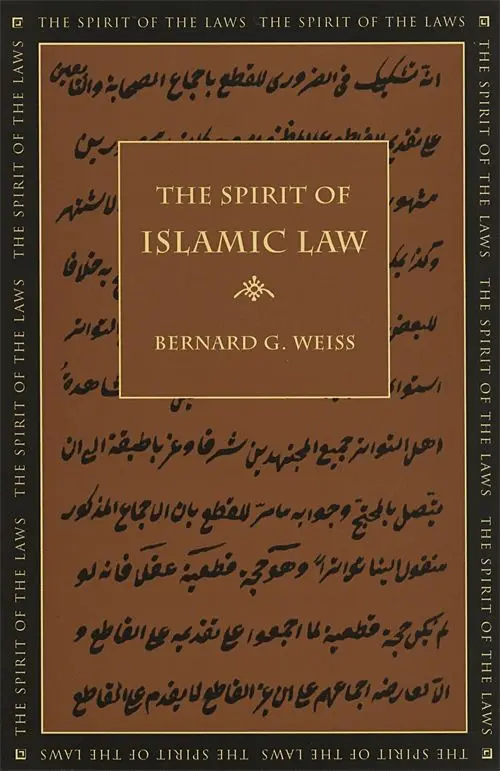
The Spirit of Islamic Law
About The Book
This study focuses on a Muslim legal science known in Arabic as usul al-fiqh. Whereas the kindred science of fiqh is concerned with the articulation of actual rules of law, this science elaborates the theoretical and methodological foundations of the law.
The Spirit of Islamic Law outlines the prominent features of Muslim juristic thought: espousal of divine sovereignty; a fixation on divine texts; an uncompromisingly intentionalist approach to the interpretation of those texts; a frank acknowledgment of the fallibility of human endeavor to capture divine intent; a toleration of legal diversity; a moralistic bent grounded in a particular social vision; and finally, a preoccupation with the affairs of private individuals―especially family relations and contracts―coupled with a concern to define the limits of governmental power.
About The Author
Original: $26.95
-65%$26.95
$9.43The Spirit of Islamic Law
About The Book
This study focuses on a Muslim legal science known in Arabic as usul al-fiqh. Whereas the kindred science of fiqh is concerned with the articulation of actual rules of law, this science elaborates the theoretical and methodological foundations of the law.
The Spirit of Islamic Law outlines the prominent features of Muslim juristic thought: espousal of divine sovereignty; a fixation on divine texts; an uncompromisingly intentionalist approach to the interpretation of those texts; a frank acknowledgment of the fallibility of human endeavor to capture divine intent; a toleration of legal diversity; a moralistic bent grounded in a particular social vision; and finally, a preoccupation with the affairs of private individuals―especially family relations and contracts―coupled with a concern to define the limits of governmental power.
About The Author
Product Information
Product Information
Shipping & Returns
Shipping & Returns
Description
About The Book
This study focuses on a Muslim legal science known in Arabic as usul al-fiqh. Whereas the kindred science of fiqh is concerned with the articulation of actual rules of law, this science elaborates the theoretical and methodological foundations of the law.
The Spirit of Islamic Law outlines the prominent features of Muslim juristic thought: espousal of divine sovereignty; a fixation on divine texts; an uncompromisingly intentionalist approach to the interpretation of those texts; a frank acknowledgment of the fallibility of human endeavor to capture divine intent; a toleration of legal diversity; a moralistic bent grounded in a particular social vision; and finally, a preoccupation with the affairs of private individuals―especially family relations and contracts―coupled with a concern to define the limits of governmental power.
About The Author